
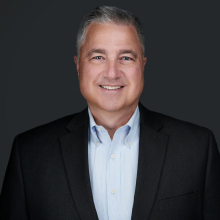



 John E. Chapman Chief Executive Officer
A Changing World Requires a Different Kind of Advice
As we celebrate our firm’s 20th anniversary, we have been reflecting on the unlikely beginning of a firm that set out to challenge an outdated Wall Street brokerage model and, in doing so, created a truly client-centered experience. In Part One of our story (The Story of an Unconventional RIA), we explored the conviction that inspired John Chapman to build something fundamentally different and the intentional decisions that transformed that early vision into the enduring firm we are today.
Part Three of our story explores why that approach matters today. Families have access to more information, more choices, and more voices offering guidance, but not necessarily greater clarity about their most important decisions. Helping them find that clarity brings Clearwater’s people, expertise, and shared values into focus.
More Information, Conflicting Agendas, and Harder Decisions
We live in an age of extraordinary access. What once arrived in measured intervals through a limited number of sources now flows continuously through news outlets, market commentary, social media, data platforms, and artificial intelligence. The challenge has become separating meaningful insight from constant noise.
The voices competing for investors’ attention often bring agendas and incentives that are not immediately apparent. Financial media, product providers, institutions, and commentators may frame information through their own perspectives, making it difficult to distinguish objective guidance from recommendations influenced by commercial interests.
Unfiltered access and noise conspire to make life’s most consequential decisions especially challenging. When is the right time to step away from a business or leadership role? How should concentrated wealth be diversified while considering taxes and long-term objectives? How can the next generation be prepared for the opportunities and responsibilities wealth creates?
Increasingly, the question becomes: how can a family best manage its resources to create the greatest possible impact for the people and purposes it values most?
These decisions require more than information or technical expertise. They require knowledge, experience, and sound judgment to navigate choices as circumstances change.
From Information to Wisdom
Nearly a century ago, T. S. Eliot captured a distinction that feels remarkably relevant today when he asked, “Where is the wisdom we have lost in knowledge? Where is the knowledge we have lost in information?”
His questions speak to a timeless truth: information is not the same as knowledge, and knowledge alone does not ensure wisdom.
Aristotle offered another perspective through his concept of practical wisdom: the ability to deliberate thoughtfully about what is good and determine an appropriate course of action. In other words, increasing between what is merely good versus what may be best.
Together, these ideas point to an understanding that guides our work. Wisdom is not the claim to possess every answer. It is the disciplined application of knowledge, experience, and sound judgment to unique family circumstances.
For the past 20 years, Clearwater Capital has embraced this philosophy, recognizing that effective advice requires considering the entire picture, acknowledging uncertainty, and weighing not only what is possible, but what is appropriate.
This is where the collaborative model described in Part Two of our story (Built to Endure) becomes especially meaningful. Different areas of expertise bring different perspectives to the same decision, helping identify connections, consequences, and questions that might otherwise be overlooked.
Sometimes wisdom means beginning early, while time allows for a broader range of choices. Sometimes wisdom means pausing before reacting to fear, excitement, or a compelling new idea. And sometimes, wisdom means recognizing that a strategy that once served an important purpose no longer reflects a family’s needs or long-term objectives.
The most important financial decisions cannot be reduced to a formula or solved by a model alone. They require an understanding of the family behind the facts: what they value, the responsibilities they carry, and what they hope their wealth will make possible.
When Optimization Meets Wisdom
In wealth planning, families may seek stronger long-term returns, lower taxes, greater efficiency, or more flexibility. Each objective can be valid. But considered independently, they can conflict sharply with one another.
The lowest-tax strategy may introduce complexity a family neither wants nor needs. The most sophisticated estate structure may be poorly suited to the people responsible for carrying it forward. The investment with the greatest expected return may introduce risks that undermine the portfolio’s true purpose.
When focused on a single measure, optimization can only ask, “What produces the best numerical result?” Wisdom adds the questions that give that result meaning: “Best for whom? In service of what purpose? And at what cost?”
Consider a business owner preparing for a sale. The decision is not simply about achieving an attractive transaction value. It may also involve the timing of taxes, replacing business income, the interests of family members, charitable intentions, and what comes next for someone whose identity has long been connected to the enterprise. A decision in one area can reshape the choices available in another.
The power of effective advice lies not simply in optimizing individual decisions, but in seeing their connections and helping families make choices that work together in pursuit of what matters most.
Clearwater’s Wealth 3.0
For two decades, Clearwater Capital has been guided by the belief that meaningful financial advice must extend beyond managing assets. It must help families navigate the broader decisions, responsibilities, and opportunities that accompany wealth.
We have come to think of this philosophy as Wealth 3.0: bringing complementary expertise together, anticipating consequential decisions, and evaluating financial choices in the context of the family’s broader life.
The analogy to Medicine 3.0 is instructive. It describes a more proactive, personalized, and participatory approach to health, focused on identifying risks early and preserving quality of life over time. Wealth 3.0 applies a similar philosophy to wealth: anticipating decisions before they become urgent and helping clients participate thoughtfully in the choices that will shape their future.
Traditional wealth management has often centered on investments, products, performance, or isolated planning transactions. Those components still matter, but they are not sufficient on their own. You cannot evaluate a portfolio apart from its tax consequences. An estate plan cannot be separated from the family dynamics required to sustain it.
Wealth 3.0 begins with better questions. Rather than asking only, “What should we invest in?” or “How can we reduce taxes?” it asks: What are we trying to make possible? What risks could interfere with that vision? Which tradeoffs are worth making, and which are not?
This approach does not diminish technical expertise. It makes that expertise more valuable by placing it in the proper context. Technology, data, and specialized knowledge can deepen insight and improve execution, but they cannot replace the human understanding required to determine what is appropriate for a particular family.
Wealth 3.0 is not a departure from Clearwater’s founding philosophy. It more clearly defines a commitment that has guided the firm for 20 years: ensuring financial decisions serve the lives families aspire to live.
Built for This Moment
Clearwater Capital Partners’ story represents more than the growth of an independent firm. It reflects the intentional development of an organization equipped to connect the many dimensions of wealth and bring its collective experience and judgment to bear when those connections matter most.
Those moments rarely arrive on a convenient timetable. They may emerge through a business sale, a change in health, a leadership transition, or the loss of a loved one. Sometimes, they begin with a quieter realization: time is moving faster than expected, and you can no longer postpone important decisions.
Navigating these circumstances requires more than technically sound answers. Families need a trusted partner who can distinguish what is important from what is merely urgent and consider how a decision today may shape the years ahead. Someone willing to begin not with a product or a prediction, but with a deeper question: What does success truly mean for this family?
Time, wealth, and what matters most are inseparably connected. Time amplifies the choices we make. Wealth creates opportunities to pursue them. And what matters most gives those choices meaning and purpose.
Our goal is to help families live with confidence, joy, and a spirit of abundance, allowing wealth to serve the people and purposes that give it meaning.
As we celebrate our first 20 years, we do so with gratitude for the clients who have entrusted us with their most important decisions and the colleagues who have helped turn an unlikely vision into an enduring firm.
The story of Clearwater Capital Partners is still being written. And with the same conviction that inspired its beginning, we now turn toward the next 20 years.
20261026-1